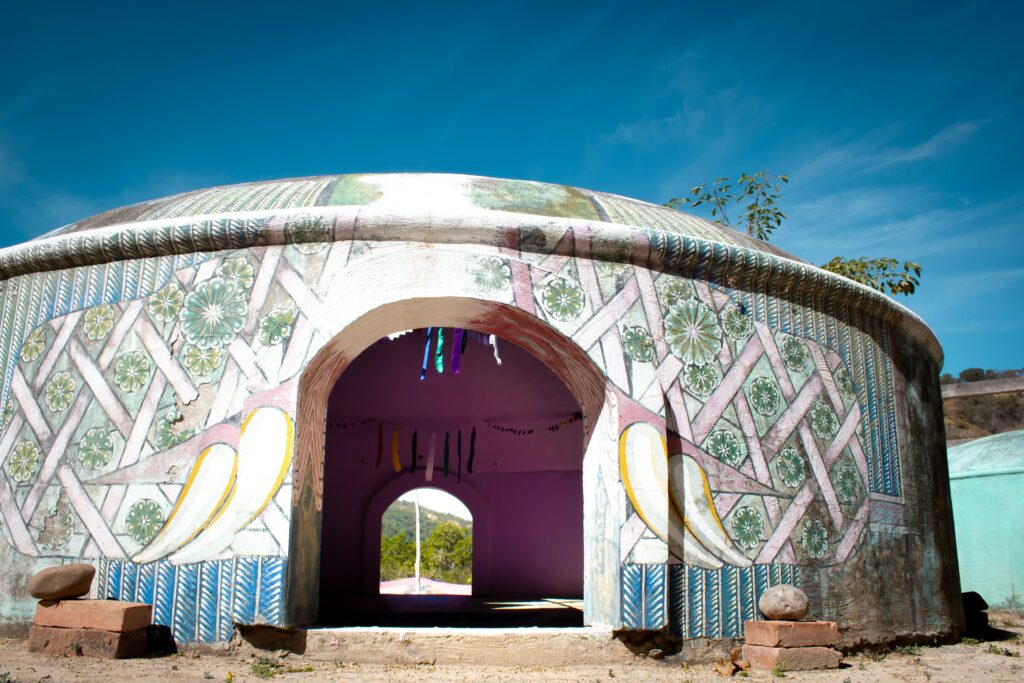
A temazcal is a low heat sweat lodge coming from pre-Hispanic Indigenous peoples in Mesoamerica. What is referred to as temazcal is this traditional structure as well as the temazcal ceremony held inside. The term temazcal originates from the Nahuatl word temāzcalli, meaning house of heat, or a combination of words teme (to bathe) and calli (house). Temazcals are usually igloo-shaped and made from volcanic stone, wood or cement. Traditionally a temazcal is a small space where only a few people can fit in at the same time; however some modern temazcals can take up to 20 people. There are volcanic rocks in the centre of the temazcal and water is poured on these stones for steam. Herbs like sage or copal are also added to the steam for the cleansing and spiritual purposes. Temazcal ceremony involves sitting in a sweat lodge for spiritual, mental and physical therapeutic benefits. This ritual is not just a steam bath; there is an ancestral context and a meaningful spiritual significance that shouldn’t be overlooked. Peoples of Mesoamerica (today’s Mexico and Central America) have used the temazcal for many centuries. This practice is historically important for the emergence of good hygienic and spiritual practices. Ancient practitioners worshipped Goddess Tonantzin (Mother Earth) and the temazcal represented her womb. Therefore whenever a person steps out of ceremony, they are symbolically reborn. Temazcal was used as a cleansing ceremony for warriors before and after wars and as a place to give birth in for women. Unfortunately, many temazcal structures were destroyed by the Spaniards however, some hidden locations were used to help this tradition stay alive until this day. Nowadays temazcal has gained popularity and is practiced in different regions as well.
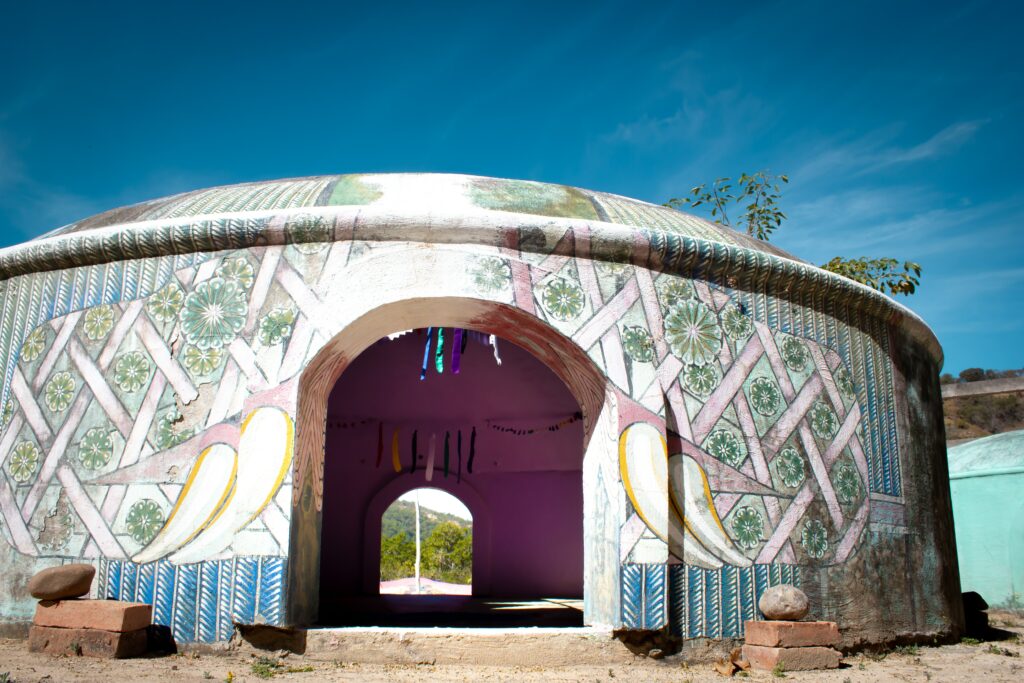
Temazcal rituals can differ from region to region however, typically they take around two hours and are led by a shaman or a temazcalero who guides the group through the process. Benefits of temazcal include:
- Heat and the brain: heat raises the body’s noradrenaline for a short time (sauna studies below). A large Finnish study of 2,315 middle-aged men linked frequent sauna use with a lower risk of dementia later in life. It shows a link, not a cause, and it studied Finnish saunas, not temazcals.
- Increasing stress resilience: Many people feel calm after a sweat. The sauna studies listed below measured short changes in stress hormones during the heat; they did not test anxiety, and none of them was a temazcal.
- Helping with mild depression: One small Japanese study of people with mild depression found that repeated warm-sauna sessions eased appetite loss and some complaints. It is not a treatment: if your mood is low most days for more than two weeks, please see your doctor.
- Increasing recovery: With respect to the new scientific studies, thermal therapies such as temazcal can help with blood circulation and help with recovery.
- Feeling cleansed: many people say they feel clean and light after the sweat. Sweat itself carries out very little; the liver and kidneys do the body's cleaning.
- Spiritual Impact: Aside from physical benefits, many people attend these ceremonies for spiritual wellness as it was believed that the temazcal could heal and cleanse the soul as well as the body.
- Reducing chronic fatigue: A small Japanese report on two patients with chronic fatigue syndrome found that repeated warm-sauna sessions eased their tiredness and pain. Two people are not proof, and it was not a temazcal.
The structure and ceremonies of temazcal may vary from tribe to tribe however there are some common components which include:
The dome: Tribes and natives use local materials such as adobe, willow trees or stone to construct the dome. The dome is designed to block airflow and light.
Altar: The altar is designed to represent the cardinal points. Altars are decorated with feathers, flowers, candles, food, crystals, incense, instruments, animal bones and many other ceremonial pieces. The function of the altar is to hold the group’s prayers until the relevant spirits catch them.
Fire and Earth: Also known as el Abuelo (grandfather), the fire is produced using the stones which are referred as las Abuelas (grandmothers).
Water: Herbs such as eucalyptus and rosemary are soaked in water tubs for the ceremony. Steam produced with herbs is an essential part of the ceremony. The helpers can brush the groups with herbs and splash some water before entering the dome as well.
Like the temazcal, cacao ceremonies draw from rich indigenous traditions to create transformative group healing experiences. If ceremonial facilitation resonates with your path, cacao ceremony training offers a structured entry point into this sacred practice.
Temazcals purify and cleanse the body, mind and soul. Ceremonies can have specific aim or healing intentions. Typical medicines used in these ceremonies are sage, sweet grass, copal resin, and Brazilian Pepper Tree leaves. The ceremonies can involve singing, praying and chanting. Things can go wrong if there is a lack of proper supervision, therefore people should be careful when choosing the location. In a typical ceremony, after the group is invited into the temazcal, everyone sits in a circle. There is an element of “sensory deprivation and a collective state of vulnerability” in the darkness and heat. More rocks, water and medicine are introduced through the ritual. If the experience becomes too overwhelming and you are not feeling good, you can inform the shaman or temazcalero and stop at any point. After the ceremony is over, you might be directed into a cool shower or a pool to help lower your body temperature. Before a temazcal ceremony, make sure to hydrate well since you’ll be sweating. Sometimes tea drinking is incorporated into these ceremonies to help with hydration. Please do not take part if you are pregnant, have heart disease, very low or uncontrolled high blood pressure or epilepsy, or have had alcohol or drugs in the last 24 hours. If you have any other health condition or take regular medication, ask your doctor first. Leave at once if you feel dizzy, sick or confused.
Our events do not include a temazcal, but they share its heart: a group, a guide, and time for the body to let go. See our upcoming Holosomatic® Experiences.
References
Laatikainen, T., Salminen, K., Kohvakka, A., & Pettersson, J. (1988). Response of plasma endorphins, prolactin and catecholamines in women to intense heat in a sauna. European journal of applied physiology and occupational physiology, 57(1), 98-102.
Lammintausta, R., Syvälahti, E., & Pekkarinen, A. (1976). Change in hormones reflecting sympathetic activity in the Finnish sauna. Annals of clinical research, 8(4), 266-271.
Laukkanen, T., Kunutsor, S., Kauhanen, J., & Laukkanen, J. A. (2017). Sauna bathing is inversely associated with dementia and Alzheimer’s disease in middle-aged Finnish men. Age and Ageing, 46(2), 245-249.
Leppäluoto, J., Huttunen, P., Hirvonen, J., Väänänen, A., Tuominen, M., & Vuori, J. (1986). Endocrine effects of repeated sauna bathing. Acta Physiologica Scandinavica, 128(3), 467-470.
Masuda, A., Kihara, T., Fukudome, T., Shinsato, T., Minagoe, S., & Tei, C. (2005). The effects of repeated thermal therapy for two patients with chronic fatigue syndrome. Journal of psychosomatic research, 58(4), 383-387.
Masuda, A., Nakazato, M., Kihara, T., Minagoe, S., & Tei, C. (2005). Repeated thermal therapy diminishes appetite loss and subjective complaints in mildly depressed patients. Psychosomatic Medicine, 67(4), 643-647.
Murray, S. (2020, January 24). Temazcal: What is it and what are the benefits? Journey Mexico. Retrieved January 9, 2022, from https://www.journeymexico.com/blog/temazcal-ceremony-guide
Ohwovoriole, T. (2021, February 7). Here’s how a temazcal works. Verywell Mind. Retrieved January 9, 2022, from https://www.verywellmind.com/what-is-a-temazcal-5101237
Renshaw, S. (2021, February 14). What is a temazcal ceremony? The Green Maya Project. Retrieved January 9, 2022, from https://www.greenmaya.mx/blog/2020/11/6/what-is-your-definition-of-church
Rittmeyer, M. (2021, June 21). Temazcal: A steambath for the body and soul. Phalarope.org. Retrieved January 9, 2022, from https://www.phalarope.org/magazine/2021/6/21/temazcal-a-steambath-for-the-body-and-soul
Yazdi, P. (2020, August 26). All about BDNF + natural factors that increase it. SelfHacked. Retrieved January 9, 2022, from https://selfhacked.com/blog/a-comprehensive-list-of-natural-ways-to-increase-bdnf/
Wikimedia Foundation. (2021, November 26). Temazcal. Wikipedia. Retrieved January 9, 2022, from https://en.wikipedia.org/wiki/Temazcal
Woodman, S. (2018, January 18). Temazcal: 10 incredible health benefits of this Mayan steam bath ritual. Culture Trip. Retrieved January 9, 2022, from https://theculturetrip.com/north-america/mexico/articles/temazcal-10-incredible-health-benefits-of-this-mayan-steam-bath-ritual/
Related reading: What is the Holosomatic® Method? · InnerCamp Membership