The short answer: breathwork is not dangerous for everyone, and it is not right for everyone. Tingling, cramping, dizziness and strong emotions are common and usually pass when the breath returns to normal. Do not practise if you are pregnant, under 18, or have epilepsy, heart disease, uncontrolled high blood pressure, glaucoma or a severe mental health condition. The full list is below and on our breathwork safety page.
Breathwork refers to the increasingly popular practices that use conscious and focused breathing to enter different states of awareness. It can be done as a simple practice to gain relaxation, but also with the intention of diving deeper into our body and mind.
It can lead to the arising of different physical and emotional sensations that can sometimes be experienced quite intensely. Often it is in these intense experiences where the healing potential of breathwork lies, however, it has also brought up the big question of whether breathwork is truly safe to practice.
In this article we will dive into the effects of breathwork and safety issues concerned with them, and expand on how to do breathwork safely.
Effects of breathwork
Breathwork brings up a wide range of thoughts, feelings and sensations, ranging from bursts of emotions such as sadness or joy to shaking and intense physical pleasure.
Physical Manifestations
Physical effects can show up in many ways, such as
- Strong physical sensations; we also call it physiological drama.
- Tetany, tension and cramping that focuses on the hands, arms, feet, legs and mouth.
- Tetany can also be the physical manifestation of fear.
- Anaesthesia, feeling sleepy during a session.
- Emotional anaesthesia: Each time the person is about to have an intense emotional experience they fall asleep. It is usually a self-defence mechanism that we learnt as a child.
- When the person is tired or has a tendency towards hyperactivity which represses emotion, she or he might have anaesthesia as well.
Other physical manifestations are:
- Shaking
- Tensions
- Pins and needles
- Hands that stiffen or curl for a while
- Feeling hot and cold
- Sweating
- Dizziness
- Blocked nose
- Intense pleasure
- All body orgasms
Stop, breathe normally and raise your hand if you feel chest pain, if you feel you might faint, or if panic does not ease when you slow down.
Are these physical effects safe?
In fact, these physical sensations can be the manifestations of suppressed tensions, emotions or memories surfacing. This is due to the energy generated during the session and the different level of consciousness accessed.
However, given the fact that these physical sensations brought up can sometimes be quite intense, it brings to question whether it is in fact safe to experience. A main argument against breathwork among its opponents is that these effects are caused by hyperventilation, which can be dangerous.
Sometimes during breath work we might indeed do some hyperventilation, depending on the type of breathwork and the breather. However, it is always done in a voluntary and controlled way.
Our breathwork methods are not techniques of hyperventilation. However, sometimes, the breathers extend or push the exhale and might have some symptoms of hyperventilation, such as:
- hand spasms
- feelings of lightheaded
- tingling
- confusion or difficulties in concentrating
- dizziness or light headache
These sensations usually pass within minutes once the breath slows down. They are still a signal to go gently: you can slow down or rest at any time, and you should stop and tell your facilitator if you feel faint, have chest pain or feel unwell.
Emotional & Psychological Manifestations
Breathwork can also cause an array of psychological sensations, from deep emotions and memories surfacing to mystical experiences of divine connection and big insights.
Emotions and memories may surface during breathwork, and some sessions can be very emotional, others more physical, and often people experience both simultaneously.
It is possible to have all kinds of pleasant and unpleasant emotions and memories from different parts of our lives during a breathing session. By facing these emotions and memories people can process them deeper, and sometimes even experience big releases during the session, for example by crying. People also may experience extremely positive feelings of intense love, gratitude and oneness, which also can lead to deep emotional expressions such as crying.
Is this experience of powerful emotions and traumatic memories safe?
Since people may also experience memories and emotions connected to traumatic experiences, the question of safety comes up as one wonders whether this deep reexperiencing of emotions and memories is safe and does not lead to a re-traumatization.
To answer this, the Irish psychiatrist Ivor Browne and his team suggested that when experiencing the surfacing of traumatic childhood memories, we are not dealing with an exact replay or repetition of the original traumatic situation, but with the first full experience of the appropriate emotional and physical reaction to it. This means that, at the time when they happened they weren’t fully consciously experienced, processed, and integrated.
In addition, the person confronts the memory as an adult rather than the helpless child they were in the original situation. This allows to experience all the emotions and physical sensations of the original traumatic situation from the perspective of the child, but at the same time analyze and evaluate the memory in the therapeutic situation from a mature adult perspective. Meeting old memories can still be hard, which is why deep sessions belong with a trained, trauma-informed facilitator, and why severe anxiety or PTSD without professional support is on our list of reasons not to practise.
How to do breathwork safely
If you have any health condition, talk to your doctor before a session. Please do not practise if any of these apply to you (full list and details on our contraindications page):
- Neurological and cardiovascular: epilepsy or seizures, stroke or transient ischaemic attacks, detached retina, glaucoma, uncontrolled high blood pressure, cardiovascular disease (heart attack history, arrhythmia, heart failure), aneurysm (personal or immediate family history), prescription blood thinners, implanted medical devices such as pacemakers.
- Mental health: severe mental disorders such as bipolar disorder, schizophrenia, OCD, psychotic episodes or dissociative disorders; severe anxiety or PTSD without professional support; psychiatric hospitalisation or emotional crisis in the past 10 years; active substance withdrawal; low impulse control.
- Chronic and autoimmune conditions: Addison's disease, moderate to severe COPD or another chronic lung disease, unstable diabetes, severe autoimmune or inflammatory disease, terminal illness, cancer during active treatment or in advanced stages (if in remission, ask your doctor).
- Acute and musculoskeletal: acute illness, chronic fatigue syndrome, osteoporosis or unhealed injuries, severe chronic pain affecting movement, major surgery in the last 6 months.
- Pregnancy (at any stage).
Wait at least 24 hours after alcohol, drugs or psychedelics, and do not practise after a 48-hour fast. If you have asthma, keep your inhaler within reach.
Explore the Holosomatic® Method Training: one online training in breathwork, bodywork, energy and manifestation, in three levels. It starts on 1 February 2027, with Level 1 from €1,499.
Setting, Support and Aftercare
It is important to practice breathwork in safe environments where nothing around you can harm you, for example, breathwork while driving or operating machinery is a big no!
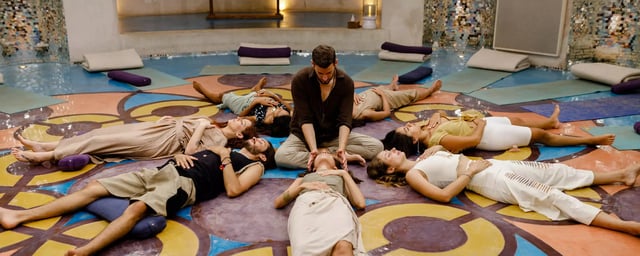
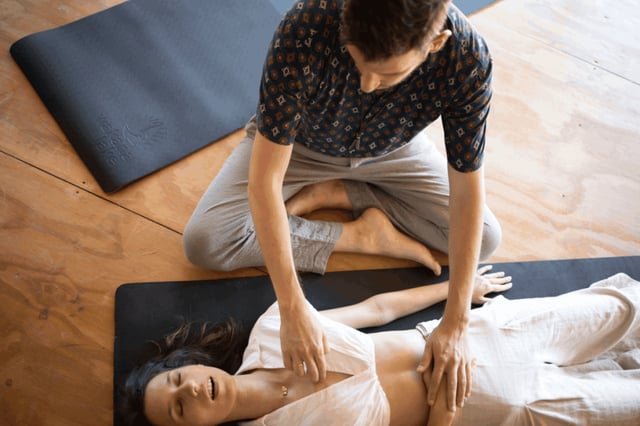
Furthermore, deep breathwork sessions should be practised in the presence of a facilitator to help you navigate through whatever comes up and to cope with any sort of emotions, negative beliefs and thoughts in each step so you can proceed in the best way.
It is also important to take the process slow, with adequate time taken for the different parts of the process, to land after the session and process what comes up. And if traumas or deep emotions are awakened, then guidance is also necessary from the facilitator after the session.
Breathwork can be intense on the body and mind. Respecting the list above and practising with a trained facilitator lowers the risk a great deal, but no practice is right for every body. The conscious use of our own breath is a beautiful way to unlock the power of our body and help us tap into a vast field of benefits, healing and self-regulatory techniques that lie within us.
Explore the Holosomatic® Method Training: one online training in breathwork, bodywork, energy and manifestation, in three levels. It starts on 1 February 2027, with Level 1 from €1,499.
Explore the Holosomatic® Method Training: one online training in breathwork, bodywork, energy and manifestation, in three levels. It starts on 1 February 2027, with Level 1 from €1,499.