Article by Dániel Turner
Life is a unique journey for all of us. On the way, we each have so many experiences: people, events, emotions, sensations. We dream, we hope, we imagine, we create. It can be like a never ending travelling experience, full of surprising and unexpected excitements. However, what happens when you lose your map and insecurity becomes your largest challenge?
No traveller enjoys the journey without inner security and stability. Imagine, your desired destination is far away and the route is unknown, but you want to reach it anyway. What would you do?
During breathwork sessions, you do not necessarily need an exact destination but insecure moments still might appear from time to time. ‘What’s happening to me?’ ‘What is going to happen?’ ‘Is it right to experience this?’ — you might ask yourself.
It’s natural that you may feel lost at times during sessions. Especially, the first time. Although, to find your way back to yourself differs from person to person. There is one thing that could help you stabilise and ground your inner security: to recognise your non-ordinary state of consciousness. How can you do it and why is it important?
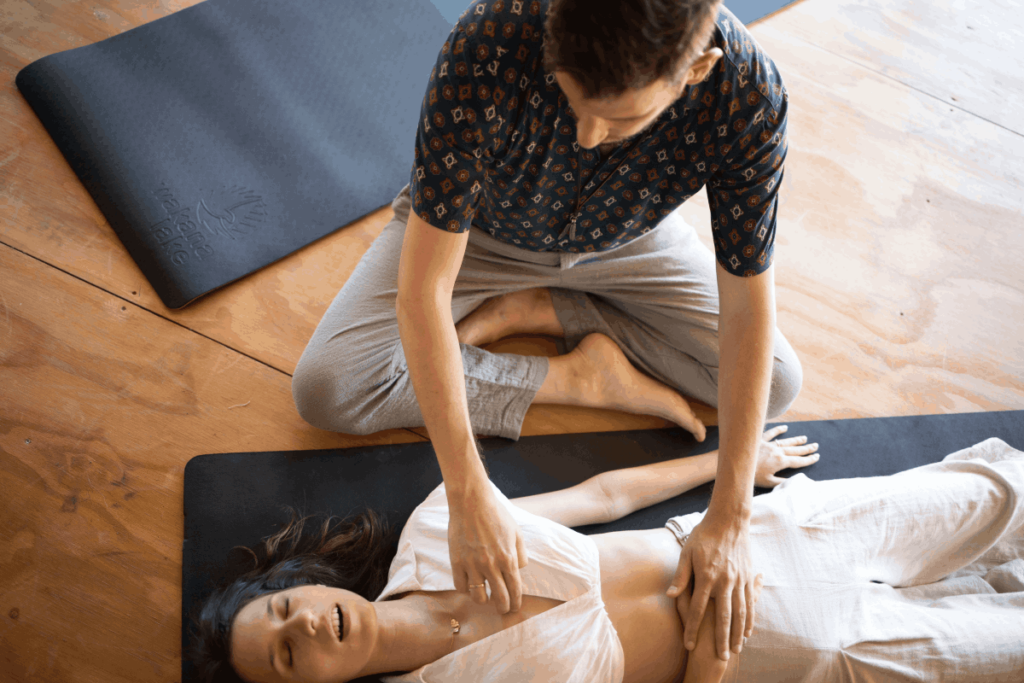
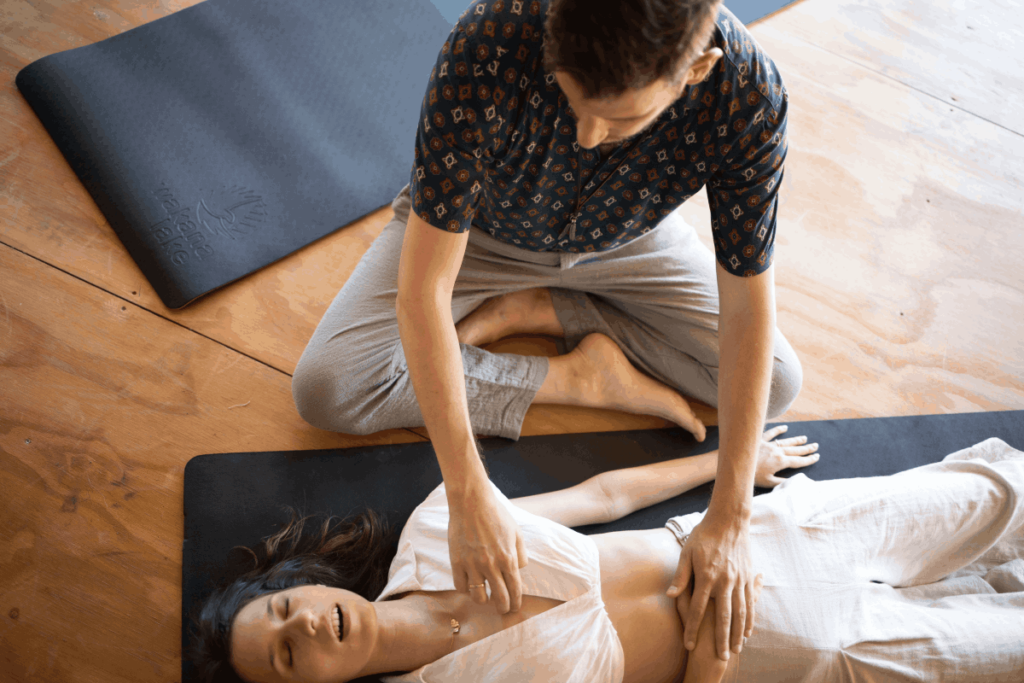
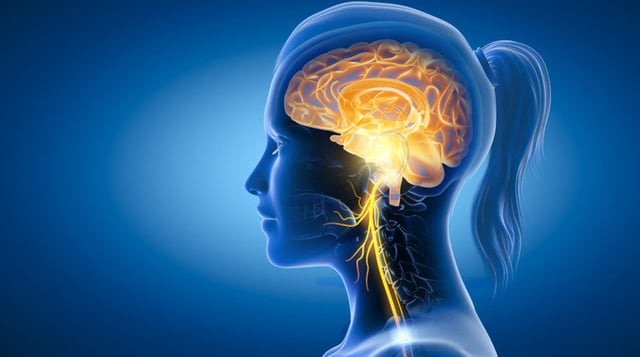
First, in order to recognise it, you need to understand and get to know the processes that happen during breathwork. The aim of the technique is to breathe rapidly and deeply with evocative music and focused bodywork to achieve an altered state of mind. This serves as an ‘inner radar’ to detect your emotionally charged subconscious thoughts and bring them into consciousness through process and subsequent healing. For training, see the Holosomatic® Method Training.
With its help, you are able to dive deep and bring stuck emotions to the surface, thus releasing them. Whether it is a negative emotion buried deep down or positive feelings that you do not let affect you, this technique removes obstacles.
It is important to keep in mind that this process can be profound and even overwhelming. However, it is also important that it’s a PROCESS. It takes time and it is natural to feel differently through forgotten or unknown emotions. So, before introducing you to the conscious part, I would like to invite you to this acceptance. To this acceptance of the process. You choose your own depth. You can slow your breath or open your eyes at any time, and the facilitator is there to help you.
Guided by a trained facilitator, connected breathwork is safe for most healthy adults, but it is not for everyone. Please do not take part if you are under 18 or pregnant; if you have epilepsy, cardiovascular disease, uncontrolled high blood pressure or glaucoma; after recent major surgery; if you have a severe mental health condition or a recent psychiatric crisis; or within 24 hours of alcohol or drugs, or during a 48-hour fast. Breathwork is not a substitute for medical advice. More on our Breathwork safety page. Breathwork is not a treatment for anxiety or depression; if you live with either, talk to your doctor first. How do we get into that profound and sometimes overwhelming state? Well, the altered state of mind induced by breathwork is connected with extreme sensory experiences.

When doing breathwork, your focus shifts mostly to your breath. It means that other effects like sounds or lights fade away. Connecting to your breath means that you connect to yourself. This is why your focus turns inwards.
Sometimes, intense and unusual emotions appear that you would not usually notice. Sadness, pain, joy, love, and everything you experience through feelings, are stored into your body. By giving them space and focusing on them, their intensity grows as you breathe with them.
You might behave in a way that you would describe as strange - for example, your muscles might get stiff or toned or become extremely relaxed. If you tremble, or shake, it’s okay. This is a natural indication that you are in another state.
It is even possible that alterations in thought patterns may occur. You try to follow your thoughts as usual, but they are not working as usual. This is normal. Mindfulness, connecting to your breath also means that your thoughts cease. Getting into a clear, maybe even empty state can be the key to starting over.
Everything mentioned above is fine when you are going through the session’s process. If you listen carefully to your body and accept, you will find that it serves you and is essential in recognising your altered state of consciousness.
Moving further, as you turn inwards, you might meet exciting and new experiences as emotions are stored in your body. This releasing technique can take you to a repressed traumatic memory or past hard life experiences, dream contents, experiences of psychological death and rebirth or feelings of cosmic unity.
Your altered state of mind allows you to absorb yourself and become deeply engaged in mental imagination. Wherever it takes you, whatever feelings it brings you, they are welcome and mean that you stepped through the gate of conscious into your unconscious world. However, do not forget: everything changes and nothing lasts forever! Once you have stepped in, you can step out. Step out and see, feel, hear, and touch differently. This is the invitation: to notice and let change happen.
’’While trauma can be the hell on Earth, released trauma can be the gift of God – a heroic journey, which is unique for everyone’’ – Peter Levine
Want to try this with a facilitator in the room? See our upcoming Holosomatic® Experiences.
Literature
Rock, A. J. (2015). Exploring Holotropic Breathwork: An empirical evaluation of altered states of awareness and patterns of phenomenological subsystems with reference to transliminality.
Rhinewine, J. P., & Williams, O. J. (2007). Holotropic Breathwork: The Potential Role of a Prolonged, Voluntary Hyperventilation Procedure as an Adjunct to Psychotherapy. The Journal of Alternative and Complementary Medicine, 13(7), 771–776.
Explore the Holosomatic® Method Training: one online training in breathwork, bodywork, energy and manifestation, in three levels. It starts on 1 February 2027, with Level 1 from €1,499.