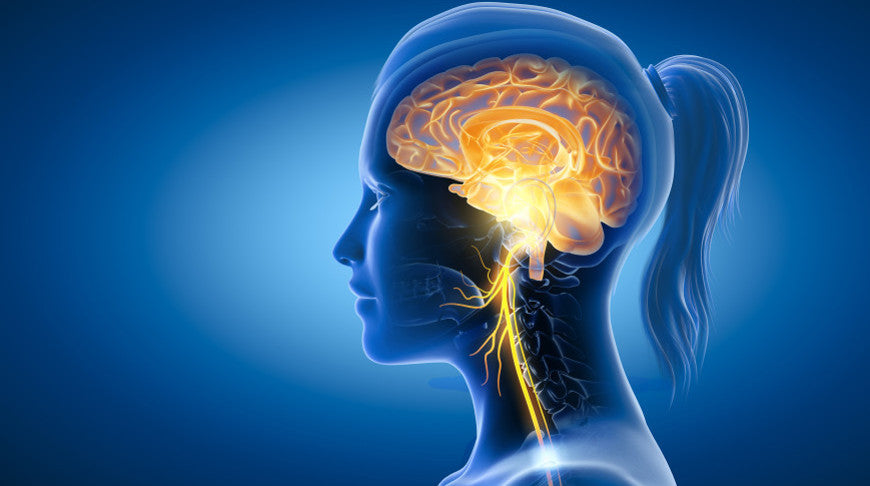
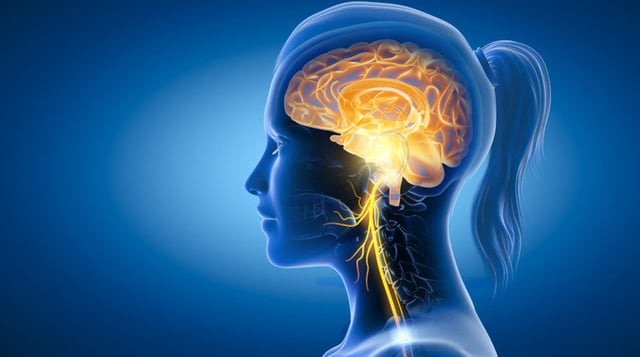
The vagus nerve is a main component of the parasympathetic nervous system, carrying signals from the digestive system to the brain, also known as the brain-gut axis (Breit, Kupferberg, Rogler & Hasler, 2018). The vagus nerve runs from the brainstem through the neck and chest to the abdomen, relaying information from inner organs (e.g. lungs, gut, heart) to the brain. The parasympathetic nervous system is responsible for regulating states of rest, such as by dilating blood vessels, increasing bowel movement and glandular secretion. Vagal fibres also carry signals from the brain to the intestinal walls, causing adaptive responses for the body to maintain homeostasis, suggesting the important role of digestion in cognitive functions (Breit, Kupferberg, Rogler & Hasler, 2018).
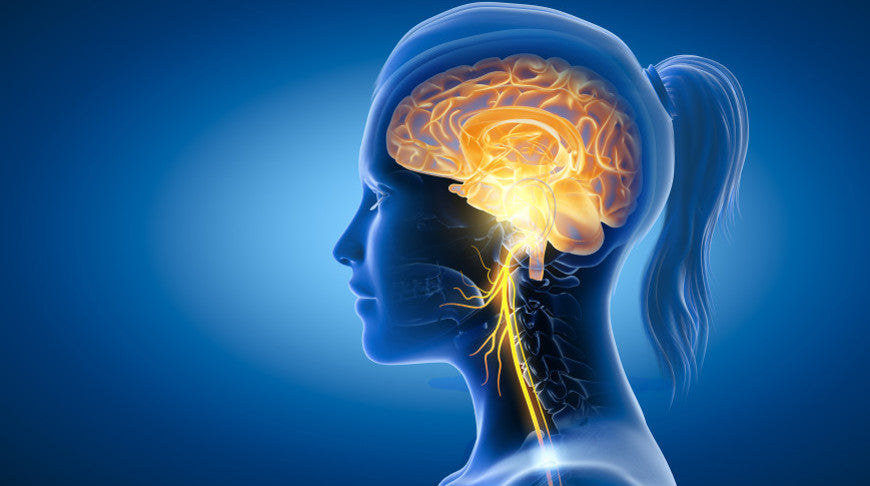
Furthermore, the vagus nerve has anti-inflammatory effects through three separate pathways (Bonaz, Sinniger, & Pellissier, 2016); the hypothalamic-pituitary adrenal (HPA) axis, splenic sympathetic anti-inflammatory pathway, and the cholinergic anti-inflammatory pathway (CAIP). The HPA axis responds to stress responses, the splenic sympathetic anti-inflammatory release noradrenaline, and the CAIP has properties of fast neural conductance.
Vagus nerve stimulation (VNS) is a medical treatment with an implanted device, used by doctors for some people with epilepsy or depression (Schlaepfer et al., 2008). It is not breathwork, and breathwork is not suitable for people with epilepsy (see Breathwork safety). In regard to breathwork, researchers have proposed that yogic breathing affects the vagus nerve (Streeter, Gerbarg, Saper, Ciraulo, & Brown, 2012), and one study linked positive emotions with higher vagal tone (Kok et al., 2013). One study followed 47 people with chronic pain through 8 weeks of mindfulness meditation training; with no comparison group, they reported less anxiety and low mood (Rod, 2015). A 2.5-year follow-up of a mindfulness course for adult survivors of childhood sexual abuse found that people still reported fewer symptoms of anxiety and PTSD (Earley, Chesney, Frye, Greene, Berman & Kimbrough, 2014). The amygdala, the brain's alarm centre, is part of the fear circuit (Marek, Strobel, Bredy & Sah, 2013).
Additionally, Sudarshan Kriya Yoga (SKY) is a breathing technique which activates the vagus nerve, and thus changes the participant’s heart rate, improves cognition, and improves bowel movements (Zope & Zope, 2013). A small pilot study (Sharma, Barrett, Cucchiara, Gooneratne & Thase, 2017) added SKY breathing for 25 people whose depression had not lifted on antidepressants; they stayed on their medication during the study. Never change or stop medication without your doctor. These are early findings. They suggest that slow, regular breathing may support the calming side of the nervous system, but they do not promise a result for any one person.
Believe in your instincts. Your path is clear.
Want to practise this at home? Try the 21-Day Holosomatic® Activation.
Experience the profound impact of mindful breathing. Release tension, invite serenity, and embrace your true potential.
Bonaz, B., Sinniger, V., & Pellissier, S. (2016). Anti-inflammatory properties of the vagus nerve: potential therapeutic implications of vagus nerve stimulation. The Journal of physiology, 594(20), 5781–5790.
Breit, S., Kupferberg, A., Rogler, G., & Hasler, G. (2018). Vagus Nerve as Modulator of the Brain-Gut Axis in Psychiatric and Inflammatory Disorders.Frontiers in psychiatry, 9, 44.
Earley, M. D., Chesney, M. A., Frye, J., Greene, P. A., Berman, B., & Kimbrough, E. (2014). Mindfulness intervention for child abuse survivors: a 2.5-year follow-up.Journal of clinical psychology, 70(10), 933–941.
Kok, B. E., Coffey, K. A., Cohn, M. A., Catalino, L. I., Vacharkulksemsuk, T., Algoe, S. B., Brantley, M., & Fredrickson, B. L. (2013). How positive emotions build physical health: perceived positive social connections account for the upward spiral between positive emotions and vagal tone. Psychological science, 24(7), 1123–1132.
Marek, R., Strobel, C., Bredy, T. W., & Sah, P. (2013). The amygdala and medial prefrontal cortex: partners in the fear circuit. The Journal of physiology,591(10), 2381–2391.
Rod K. (2015). Observing the Effects of Mindfulness-Based Meditation on Anxiety and Depression in Chronic Pain Patients. Psychiatria Danubina, 27Suppl 1, S209–S211.
Schlaepfer, T. E., Frick, C., Zobel, A., Maier, W., Heuser, I., Bajbouj, M., O'Keane, V., Corcoran, C., Adolfsson, R., Trimble, M., Rau, H., Hoff, H. J., Padberg, F., Müller-Siecheneder, F., Audenaert, K., Van den Abbeele, D., Stanga, Z., & Hasdemir, M. (2008). Vagus nerve stimulation for depression: efficacy and safety in a European study. Psychological medicine, 38(5), 651–661.
Sharma, A., Barrett, M. S., Cucchiara, A. J., Gooneratne, N. S., & Thase, M. E. (2017). A Breathing-Based Meditation Intervention for Patients With Major Depressive Disorder Following Inadequate Response to Antidepressants: A Randomized Pilot Study. The Journal of clinical psychiatry, 78(1), e59–e63.
Streeter, C. C., Gerbarg, P. L., Saper, R. B., Ciraulo, D. A., & Brown, R. P. (2012). Effects of yoga on the autonomic nervous system, gamma-aminobutyric-acid, and allostasis in epilepsy, depression, and post-traumatic stress disorder.Medical hypotheses, 78(5), 571–579.
Zope, S. A., & Zope, R. A. (2013). Sudarshan kriya yoga: Breathing for health. International journal of yoga, 6(1), 4–10.
Explore the Holosomatic® Method Training: one online training in breathwork, bodywork, energy and manifestation, in three levels. It starts on 1 February 2027, with Level 1 from €1,499.
Related reading: Breathwork safety