The origins of rebirthing began in the 1960s after Leonard Orr personally experienced a powerful event. Orr was exploring altered states of consciousness primarily through lengthy immersion in warm water. Orr recalls slipping into a state of regression and allegedly reliving his birth while bathing. He experienced emotional release and revelations and he wanted to share this experience with others (Adams 2010). Rebirthing then took about ten to fifteen years to fully develop into a breathwork therapy technique. Shortly after Orr’s discovery, Dr. Stanislav Grof explored these altered states of consciousness and developed Holotropic Breathing in the 1970s. Both Orr and Grof came to recognize over time that these deeper states of consciousness were actually induced by breathwork. In turn, the specialized breathing techniques then uncovered subconscious memories and experiences related to the birth process. Since then, breathwork has been connected to the science of prenatal psychology. (Adams 2010).
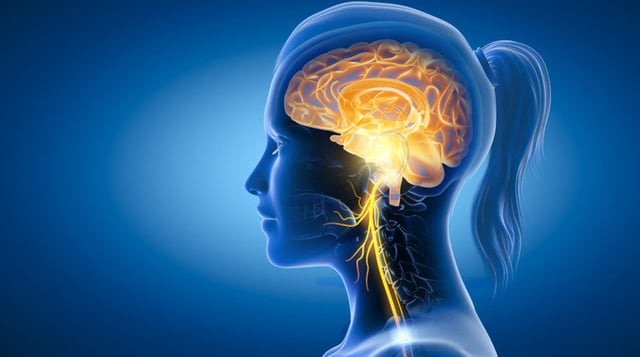
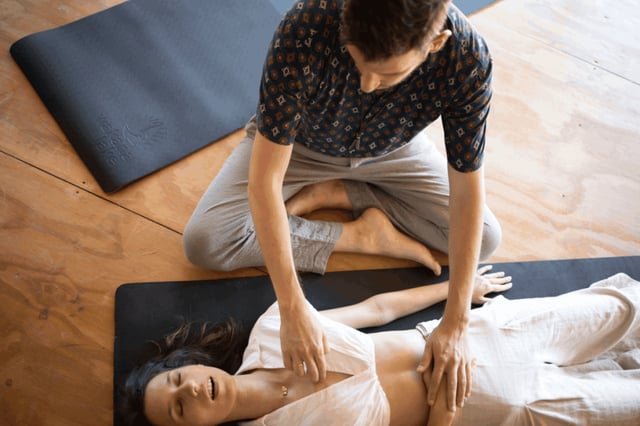
Rebirthing Breathwork (RB) consists of maintaining a consciously connected breathing rhythm for an hour or longer. This is usually done with the eyes closed and while laying on a mat. The consciously connected breathing rhythm is a type of circular breathing without pauses between the inhale and the exhale. This pattern is often very difficult to maintain and usually takes an individual multiple sessions to master. The conscious connected breathing tends to activate unresolved emotional issues and traumas and, simultaneously, the consciousness of these conflicts eventually leads to their resolution. This is called a somatic-cognitive cycle and it can usually last from about fifteen minutes to two hours (De-wit, Oliveira, Cruz, & Menezes, (2019).
Researchers Paulus de-Wit and Roberto Cruz (2020) identified the nine phases that can occur during RB.
Stage 1: Rebirthing begins with the first stage of emerging bodily sensations and emotions. This is often accompanied by physical symptoms such as trembling, tingling, shaking, cramping, and feeling cold or warm. The emotions evoked can also range from fear and sadness to love and happiness.
Stage 2: The defence stage, where the individual begins to feel dissociation and the connected breathing begins to become quite difficult to maintain.
Stage 3: coined the immersions phase, is where the breather surrenders to and immerses themselves into their arising sensations and emotions. At this stage, the breathing rhythm begins to adapt to the breather’s experience.
Stage 4: the inversion stage. Breathers experience an inversion of consciousness from central (experience themselves as the subject at the centre of consciousness) to peripheral (experience a richer and more lively sense of consciousness that does not have a centre).
Stage 5: the most important phase is the association phase. This phase is where associated memories are evoked, similar to the experience during REM sleep, where most dreams occur.
Stage 6: the insight and epiphany phase. Breathers can experience a sudden clarity about thoughts and beliefs that were not initially fully processed. Individuals often feel a deep surge of energy through their bodies as this is the stage where they are instructed to breathe the most deep, full breaths.
Stage 7: the transluminal stage, is where breathers can have a transpersonal and spiritual experience.
Stage 8: the deep relaxation stage, in which breathers are deeply relaxed and can even experience a possible short period of sleep. In fact, individuals are said to look as if they are asleep in stages seven and eight. There is also elongated breath suspension during the deep relaxation phase.
Stage 9: the return phase. Here, individuals begin to return to their bodies, open their eyes, and regain movement in their fingers, toes, hands, feet, legs, and arms. They also engage with others.
The most important phases are three, five, and six because these are the main phases in which traumatic memories are processed. During phases four through eight, consciousness repeatedly shifts through levels I and II. We view consciousness in three distinct levels: Level I is the conscious, level II is the subconscious, and Level III is the unconscious (De-wit et al. 2019).
During rebirthing, the individual experiences the sensations and emotions of traumatic memories and simultaneously the rebirthed has opened themself to recognize how they initially viewed these experiences when they occurred. In the third stage, individuals usually find themselves consciously looking at the meaning they ascribed to these experiences and realizing that their perspectives have changed.
Holotropic Breathing
Holotropic Breathwork is another type of self-healing breathwork. In many places, however, it is often viewed as a spiritual technique rather than a therapeutic one. It involves a similar type of circular breathing where there are no gaps in between each breath. The breathing is much faster than normal, and the breaths are deep and full. Mouth breathing is also typically used as it is said to support the process better than nose breathing. A facilitator guides the session and it usually lasts around 2-3 hours. It differs from Rebirthing in that repetitive calming music is played and, afterwards, participants are usually instructed to draw mandalas about their experience. Holotropic Breathwork is said to access altered states of consciousness and help a person attain a state of wholeness. InnerCamp mostly utilizes aspects of Rebirthing Breathwork, while also incorporating some aspects of Holotropic Breathwork, such as calming music and mouth breathing (La Flamme, D. M. 1994).
Conscious Connected Breathing (CCB) and Releasing Trauma
Research on connected breathing and trauma is still small. One published case study (de Wit and Cruz, 2020) describes a single person with PTSD whose symptoms eased after 8 connected breathing sessions. One case cannot show that the method works for others. Another study by Heyda (2007), looked at the effects of CCB on emotional states and connected breathing significantly evoked much more positive emotions. CCB does have evidence of reducing stress and improving overall mental health. Furthermore, a study showed that Conscious Connected Breathing Training decreased levels of anxiety and depression in breast cancer patients. These are early, small studies. Heyda's 2007 paper is a preliminary report on breast cancer patients and looked at anxiety and depression, not trauma.
Advantages of Rebirthing
Some people find Rebirthing Breathwork supports reflection on their feelings. Many people find breathwork helps them notice and release tension. It can be a useful addition to therapy, with your therapist's agreement. Rebirthing teaches individuals to become more attuned to their own needs and aspirations (Sky, M. 2009). It also helps participants become more rooted and centred upon themselves. Some people find it useful to reflect on how they view their lives. Experiences vary from person to person. Some people describe Rebirthing as energizing or relaxing; it is not a treatment for mental health conditions.
Risks & Contraindications
Connected breathing is a form of over-breathing. Tingling, dizziness, cramping in the hands and feeling short of breath are common during a session and usually pass when the breath slows. People with the conditions listed below should not take part.
Connected breathwork is not for everyone. Please do not take part if you are under 18 or pregnant; if you have epilepsy, cardiovascular disease, uncontrolled high blood pressure or glaucoma; after recent major surgery; if you have a severe mental health condition or a recent psychiatric crisis; or within 24 hours of alcohol or drugs, or during a 48-hour fast. Breathwork is not a substitute for medical advice. More on our Breathwork safety page.
Validity and Conclusion
Some facilitators also use tapping, a form of Emotional Freedom Techniques (EFT), during breathwork sessions. Some people use gentle tapping as a personal practice while noticing their feelings.
Many people describe connected breathwork as a powerful way to feel and release what they have been holding. The research is still young, and breathwork is not a treatment for depression, PTSD, addiction or pain. If you live with any of these, speak with your doctor or therapist before you join a session.
InnerCamp’s Breathwork Workshops
InnerCamp breathwork workshops involve a more natural and flowing breath, but the emotions experienced can still be very intense. InnerCamp uses mouth breathing as opposed to nose breathing. The inhale is always a bit longer than the exhale and there is always a large focus on the diaphragm and breathing from the abdomen.
InnerCamp uses multiple phases of breathwork and music plays for the duration of the breathwork session. InnerCamp also takes into other techniques such as tapping, as well as often supporting individuals’ heads with compression while intense feelings arise. Any touch during a session happens only with the person's clear consent, which they can withdraw at any time. In conclusion, InnerCamp introduces its own original breathing techniques, which incorporate much of the Rebirthing Breathwork framework, with aspects of Holotropic Breathing to ensure a greater sense of self-awareness, liberating your mind and body.
________________________________________
References
Adams, P. M. (2010). How does rebirthing breathwork work? Retrieved June 28, 2020, from Peter Mark Adams' paper on rebirthing breathwork.Adams, P. M. (2010). The Origins of Rebirthing Style Breathwork. Retrieved June 28, 2020, from The Origins of Rebirthing Style BreathworkAnderson, E. Z., & Wolk-Weiss, C. (2008). Reiki.
Complementary Therapies for Physical Therapy,239-248. doi:10.1016/b978-072160111-3.50023-3Carr, Elise (2014). Rebirthing: The transformation of personhood through embodiment and emotion. Retrieved June 29, 2020, from here. Church, D. (2010).
Energy psychology: Applying Eastern medicine to quantum entanglement [Review of the book Energy psychology: Self-Healing practices for bodymind health, by M. Mayer]. PsycCRITIQUES, 55(7). Christine Caldwell & Himmat K. Victoria (2011)
Breathwork in body psychotherapy: Towards a more unified theory and practice, Body, Movement and Dance in Psychotherapy, 6:2, 89-101, DOI: 10.1080/17432979.2011.574505De-Wit, P. A., Menezes, C. B., Dias-De-Oliveira, C. A., Costa, R. V., & Cruz, R. M. (2018).
Rebirthing-Breathwork, activation of the autonomic nervous system, and psychophysiological defenses Rebirthing-Breathwork, activation of the autonomic nervous system, and psychophysiological defenses.Revista Brasileira De Psicoterapia,20(3).Heyda, A. (2003). The Healing Breath: AN IMPACT OF THE CONSCIOUS CONNECTED BREATHING TRAINING ON EMOTIONAL STATES.
A Journal of Breathwork Practice, Psychology and Spirituality,5(2), 2003rd ser.Heyda, A., Jurkowski, M., Czuba, A., & Składowski, K. (2007). Conscious Connected Breathing Training Decreases Level of Anxiety and Depression and Increases NK Cell Counts in Breast Cancer Patients: Preliminary Report.(Vol. 15, 44-101). Poland: Aria Skłodowska-Curie Memorial Cancer Center and Institute of Oncology.Janov, A. (1978).
"Rebirthing": Dangers and delusions. Journal of Primal Therapy, 5(1), 5-15. Retrieved from here.La Flamme, D. M. (1994). Holotropic breathwork and altered states of consciousness Available from APA PsycInfo®. (619228395; 1997-70303-001). Taylor, K. (2011). Review of Holotropic breathwork: A new approach to self-exploration and therapy
.Journal of Transpersonal Psychology, 43(1), 108-112. Retrieved from Manné, Joy (2004) Conscious Breathing: How Shamanic Breathwork Can Help Transform Your LifeSky, M. (2009). Birth, rebirthing, and learning to breathe. In S. G. Mijares (Ed.),
The revelation of the breath: A tribute to its wisdom, power, and beauty; the revelation of the breath: A tribute to its wisdom, power, and beauty (pp. 83-93, Chapter xv, 283 Pages) State University of New York Press, Albany, NY. Rubin, B. K. (1984).
Cognitive, affective, and physiological outcomes of rebirthing Available from APA PsycInfo®. (616970100; 1984-56429-001). Retrieved from here.Wit, P. D., & Cruz, R. M. (2020). Treating PTSD with connected breathing: A clinical case study and theoretical implications.
European Journal of Trauma & Dissociation,100152. doi:10.1016/j.ejtd.2020.100152Young, C. (2003). Risks Within Body-Psychotherapy. Retrieved June 29, 2020, from Courtenay Young's article on body psychotherapy risks.
Explore the Holosomatic® Method Training: one online training in breathwork, bodywork, energy and manifestation, in three levels. It starts on 1 February 2027, with Level 1 from €1,499.